



 Deutsch
Blog / Tips
General properties of bamboo and maintenance tips
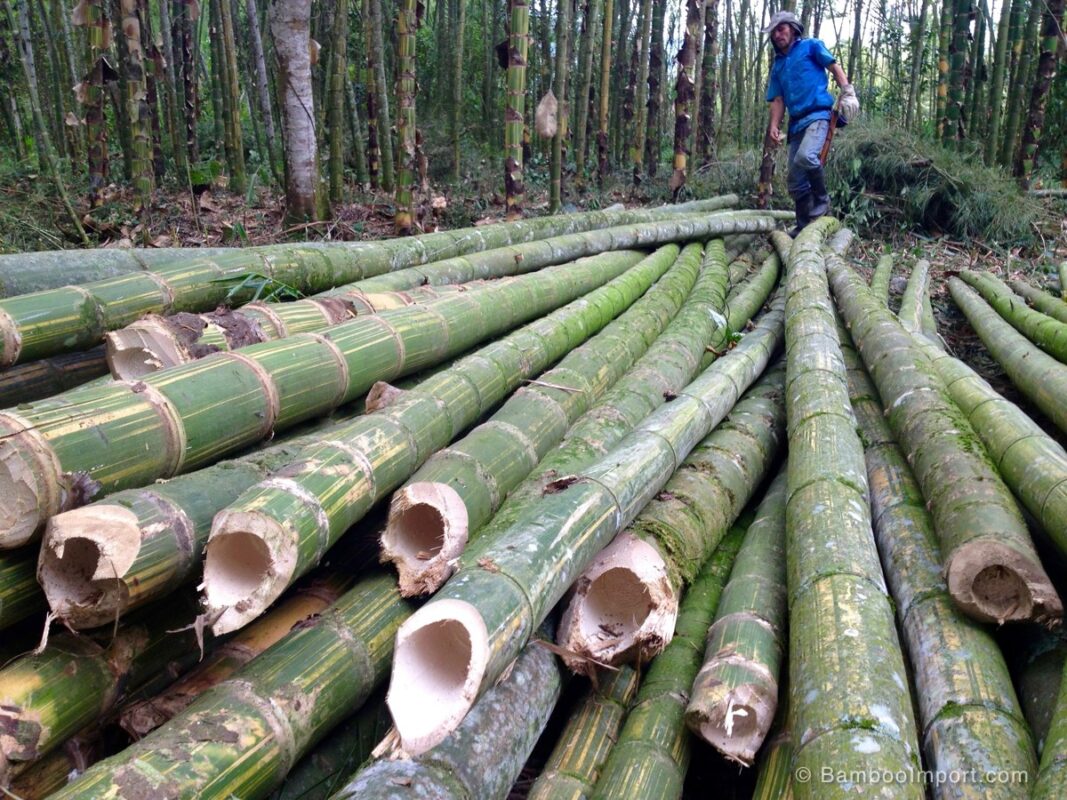
Jun
Bamboo is an endlessly renewable resource.
The fastest-growing plant on Earth, it can be harvested every 3-5 years without any negative impact on the plant or its surrounding environment. Its unique structural properties also give it a higher tensile strength than any traditional hardwood, and even many steel alloys. Bamboo’s natural aesthetic and beautifully subtle variations in grain allow it to transform yards, enhance landscapes, and add a unique tropical or rustic touch to any design.
Bamboo is often described as very durable, but this refers primarily to the sustainable growth of the bamboo plant, not so much to the durability of the bamboo stalks themselves.
Proper use, treatment, maintenance and care can ensure excellent durability, since bamboo structures more than 200 years old still exist. However, it is important that the end user is properly informed on how to get the most out of his or her bamboo products.
What is bamboo?
Bamboobelongs to the grass family and does not have the same properties as ordinary wood. Worldwide, there are approximately 130 herbaceous and 1,450 woody bamboo species known.
Bamboo is anatomically and morphologically very different from ordinary trees. A bamboo plant has a stalk, branches and leaves, but that is where the comparison with trees ends. Bamboo is hollow, has no bark or growth rings, and does not increase in diameter as the plant ages.

Bamboo stalks grow on average 25 cm per day and reach their maximum height in just 6-7 months (some tropical bamboo species grow up to 30-40 m).
Bamboo stalks mature and are ready for harvest after 3-6 years, after which new bamboo shoots develop naturally. Because of its remarkable growth rate, its 1001 different uses, and the fact that bamboo plants continue to grow without needing to be replanted, it is considered a highly sustainable resource.
Is bamboo durable?
Unlike other timber species such as teak, bamboo does not contain toxic compounds that resist biodegradation, which is why the natural durability of untreated bamboo canes is low – for most species under 2 years, and 4-7 years under ideal conditions (without exposure to sun and rain). Preserving bamboo canes is therefore essential to extending their lifespan.
The large amounts of starch found in bamboo make it extremely attractive to mould and fungi, termites and powder-post beetles. These cause a lot of damage during drying, storage and subsequent use. Bamboo also contains small amounts of wax, resin and tannins, but none of these have enough toxicity to improve its natural durability.

Due to its low natural durability, bamboo canes must be treated against possible insect infestation immediately after harvesting. One of the most widely used and effective preservation methods is impregnating bamboo fibres with a mixture of borax or boric acid minerals.
Once all the natural sugars in the bamboo fibres have been replaced with salts, they become immune to insects. Treated bamboo canes have a lifespan of 50 years or more, even when kept in direct contact with sun, rain or soil.
Final maintenance and care is required from the end user when using bamboo canes for outdoor applications. This is discussed in much more detail in the final section of this article.
Why does bamboo crack?
An important characteristic of bamboo is the way it responds to changes in temperature or humidity, as this can result in splits or cracks in the bamboo cane. To understand why this happens, we need to look at the anatomy of bamboo.
1. Anatomy of bamboo
 Bamboo is an anisotropic material, meaning its properties in the longitudinal direction are completely different from those in the transverse direction. The longitudinal direction is made up of bamboo cellulose fibres, which are strong and stiff. In the transverse direction, bamboo consists mainly of lignin, which is soft and brittle. Bamboo is therefore a one-sided reinforced composite with relatively little tangential capacity.
The shrinkage of the nodes is 4 times greater than the shrinkage of the internodes (the hollow section between two nodes). This may result from the larger amount of reinforcing fibres, which are common in the internodes but scarcer at the nodes.
Due to differences in anatomical structure and density, there is significant variation in tangential shrinkage from the inner part (10%) to the outer part (15%) of the culm wall. Thus, tangential shrinkage is higher in the outer parts of the wall than in the inner parts, which can lead to cracking.
2. Equilibrium moisture content of bamboo
Bamboo is a hygroscopic material, meaning it will absorb or release moisture from or into its surroundings until an equilibrium is reached. The moisture content therefore varies depending on the properties of the surrounding air.
Water is held in bamboo in two ways: free water retained in the cell cavities, and bound water retained within the cell walls themselves. The moisture content of the culm wall is higher in the inner part than in the outer part. The nodes have lower values than the internodes. These differences can be up to 25%.
During drying, bamboo loses free water until its moisture content reaches around 15%. Bamboo will shrink if the remaining water is driven out, but bamboo can swell again after drying when moisture is regained from the relative humidity.
Bamboo will therefore shrink and swell according to changes in relative humidity. Splits and cracks can then occur due to stress caused by sudden drying and direct exposure to the sun.
Why does bamboo weather and crack?
Like all other wood products used for outdoor applications, bamboo will weather over time.

Bamboo is a natural material, andcracks will occur because climate and environment greatly affect bamboo canes. When the temperature rises and humidity drops, the canes can dry out, causing pressure to build up in the spaces between the nodes. When this happens, the canes dry in the direction of growth, causing them to shrink. This is a natural process that cannot be avoided. Weathering of exposed bamboo occurs as a result of the interaction between various climatic conditions, such as variations in temperature and relative humidity. Bamboo canes absorb the dirt of nature, meaning the yellow colour develops a coating within about 1 year and becomes paler and sometimes darker.
If you live in an area with more air pollution, the bamboo may darken faster and develop black markings.
Repeated wetting and drying of exposed bamboo creates small cracks in the bamboo’s surface. UV rays cause the cellulose layer to break down, and finally, wind and dust particles have a sandblasting effect on the bamboo surface. The combination of all these factors ensures the weathering of outdoor bamboo products.
What can you do when cracks appear in bamboo?
Climate and environment greatly affect bamboo canes. When the temperature rises and humidity drops, the canes can dry out, causing pressure to build up in the spaces between the nodes. When this happens, the canes dry in the direction of growth, causing them to shrink. This is a natural process that cannot be avoided.
Drying also makes bamboo canes more prone to breaking or cracking. The cause of this process lies in the biological structure of bamboo canes. If you look at bamboo canes under a microscope, you can see that the canes are an anisotropic material.
This means that the canes’ structure, strength and properties differ in the direction of growth and in width. In the direction of growth, bamboo consists of cellulose fibres, which are strong and stiff.
Bamboo is a beautiful natural product, but like wood products, it will weather when exposed to the outdoor elements. It is therefore recommended to regularly maintain your bamboo decoration, fencing, furniture, structures, etc. We have developed a range of special maintenance products for bamboo that protect and care for your bamboo materials. Have you forgotten to maintain your bamboo fence and it has turned greyish? No problem – even for weathered bamboo, we have developed a series of products that can restore the original colour. Below you can find an overview of the maintenance products in our care and maintenance product range here:https://bambus-produkter.dk/product-category/maintenance-products
How to maintain and care for bamboo canes
Before protecting bamboo canes against weathering and cracking, it is important to know a few basic rules when working with bamboo materials:
Removing coating from bamboo. If you already have a fence that needs refreshing, you can buy “Grey-go off”, a product that can remove the greyish look.
To prevent the bamboo from quickly turning grey again, you can finish it with bamboo oil or one of the other products in our care and maintenance product range here:Maintenance and care of bamboo
